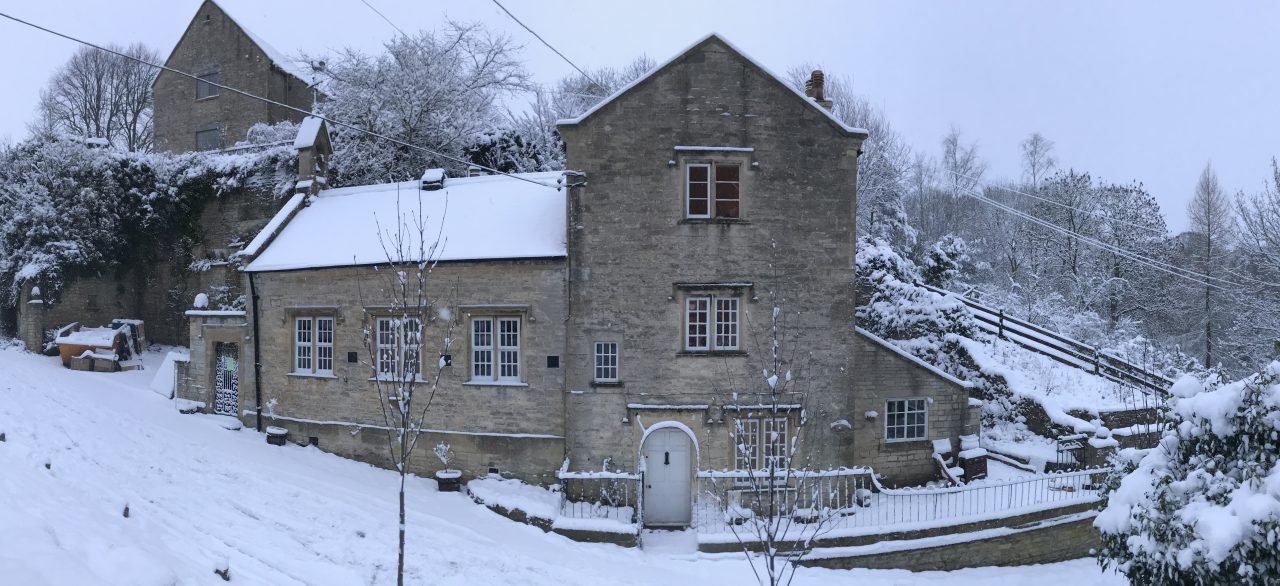
Part two of the skip chronicles features the kitchen. As far as we're concerned it's the most important room in a house and one which makes the whole 'living' thing considerably easier. It also accounts for most of the work. Plumbing, wiring, tiling, layout, cabinets... something you can get your teeth into.
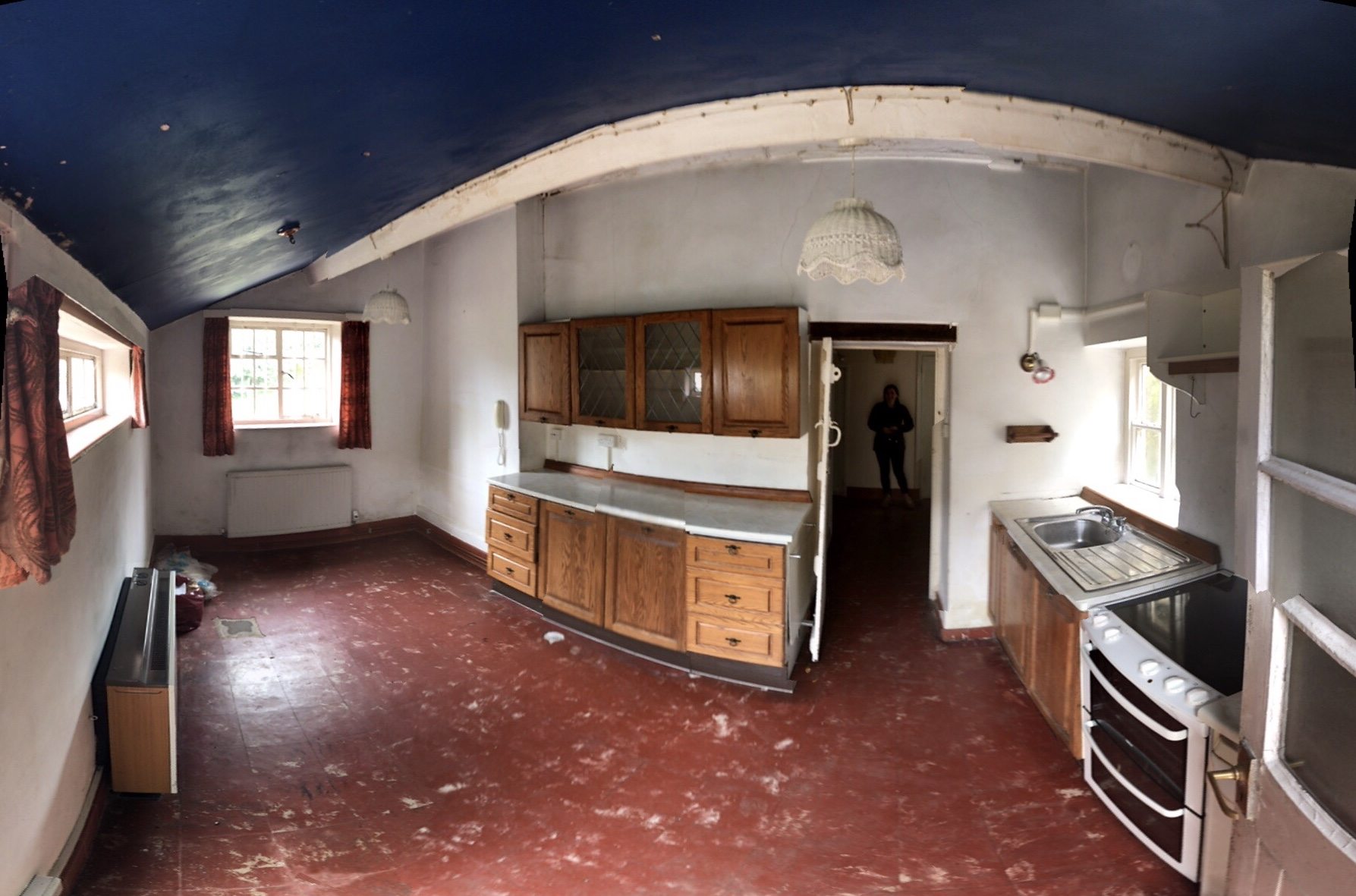
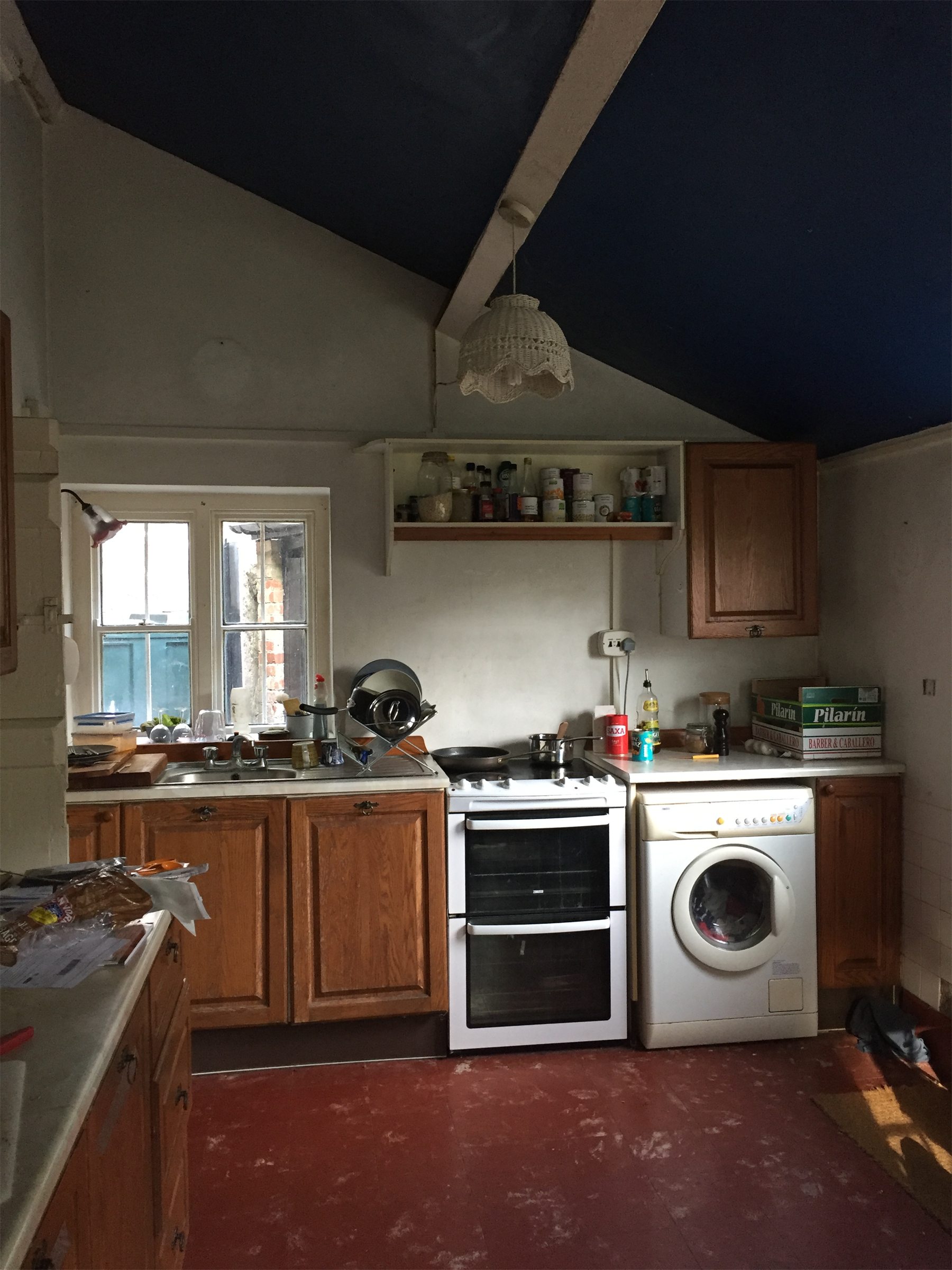
We had set ourselves up fairly comfortably in the kitchen to start with. Although very dirty, the worktops looked okay and a few bottles of bleach soon sorted them out. We didn't really bother with the cupboards; some things just aren't worth the effort. The small electric range was outwardly acceptable but the oven was still caked in yesteryear's grime and nobody could be persuaded of the benefits of cleaning this. The hob however, being just a glass sheet, came up well enough for us to consider using it. Coupled with a very large, very cheap Ikea frying pan, this stood us in good stead for rudimentary one pan meals.
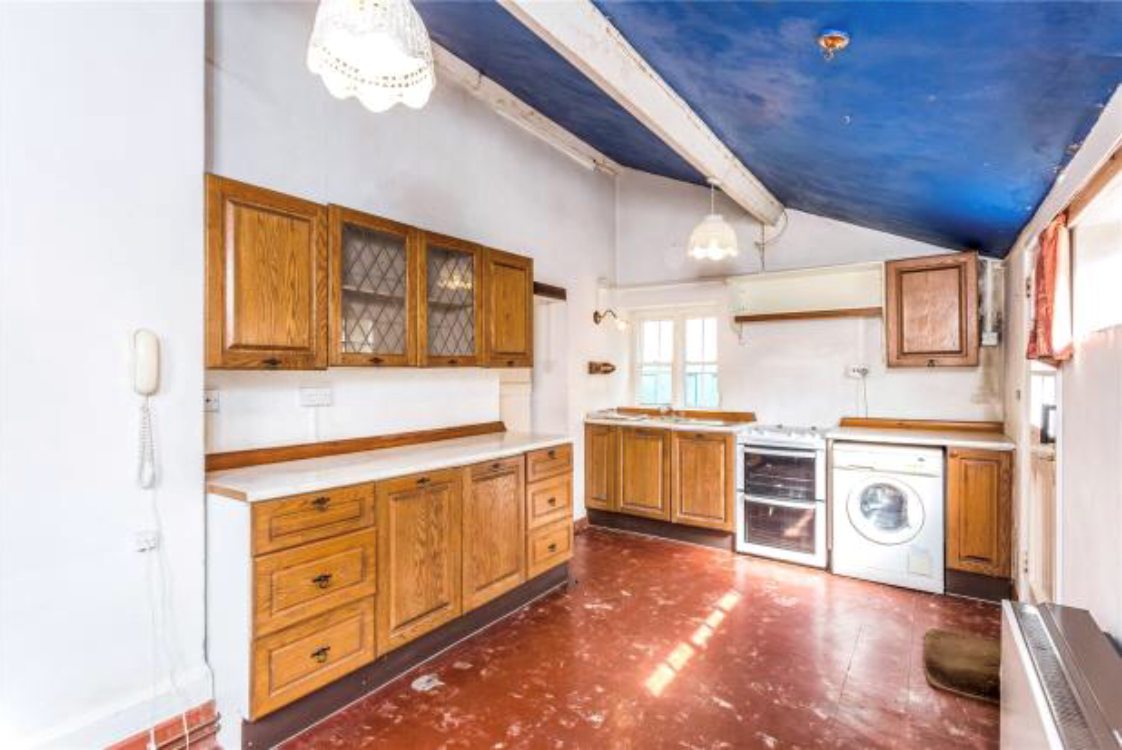
Stripping out kitchens is pretty easy work. Big items, lightly held to walls and eminently flat-packable. This one though had a little complication. As part of our asbestos testing and in line with the survey, we had sent off a fragment of floor sample to be analysed too. The vinyl tiles it turned out were very insulative and very bad for one's long term health. That a good number of them were already cracked was partially concerning though apparently this is one of the safer forms of asbestos. Joy.
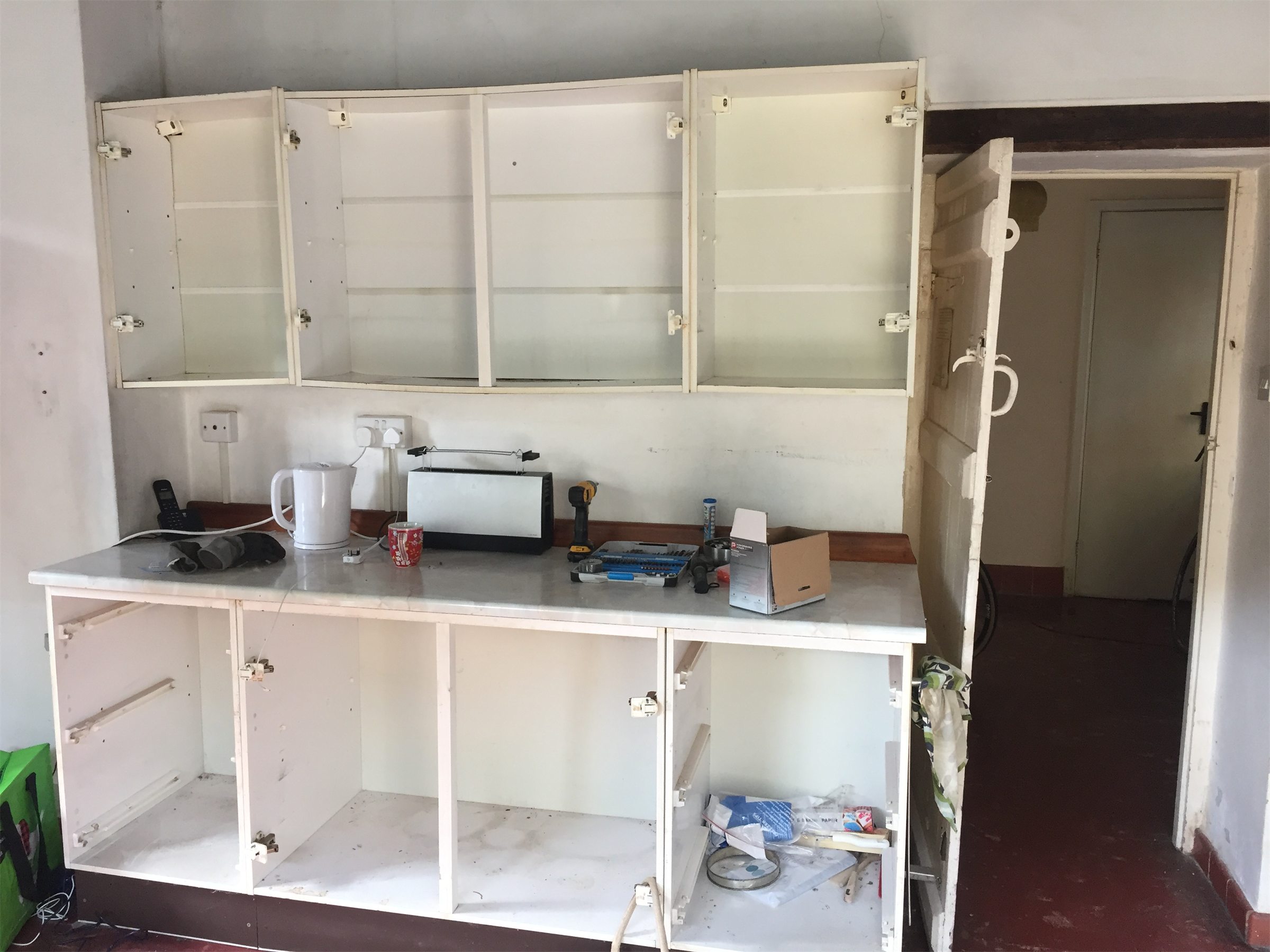
Before the tiles though came the cabinet removal (though perhaps sadly not in a political sense). Predictably it went fairly smoothly though the need for a flathead screwdriver is still a massive frustration. The more old stuff you take apart the more you learn to cherish the self-cantering nature of a pozidrive screw head, even if they round a little more easily.
The pipework around the sink did allow for a chance to learn a new skill. As none of the interior stopcocks appear to work in the house, being all verdigris'd up and seized stiff, the only clear option was to freeze the pipes. If you're new to this, it is a good idea to check that the exterior stopcock works. Just in case. Happily we'd had a new water meter fitted just a few weeks before so that side of affairs was all dandy. Pipe freezing does what it says on the tin. It forms a bung of ice inside the copperwork which allows you to carry out repairs downstream. At £10 a pop it's not something to make a habit of but when left with little choice it's a neat solution. As a process it's quite simple: you cable tie a piece of supplied insulation around the pipe, poke the tube of an aerosol can in and empty it of it chlorofluorocarbon content. Bang! One in the eye for the environment. About five minutes later the liquid from the can has boiled off and you have a frozen pipe. Needless to say it's a little nerve-wracking the first time, especially as when you slice into the downstream pipe the pressure from the expanded water (now ice) makes a lot of leaking happen. You never really know if it'll stop leaking until it does, and until then you're always a little weary of cutting the pipe completely just in case you need to go into damage limitation mode. You get about half an hour of safe working time from a single can on an 18mm pipe. Happily it all went smoothly, the pipes were capped off and the sink unit torn asunder.
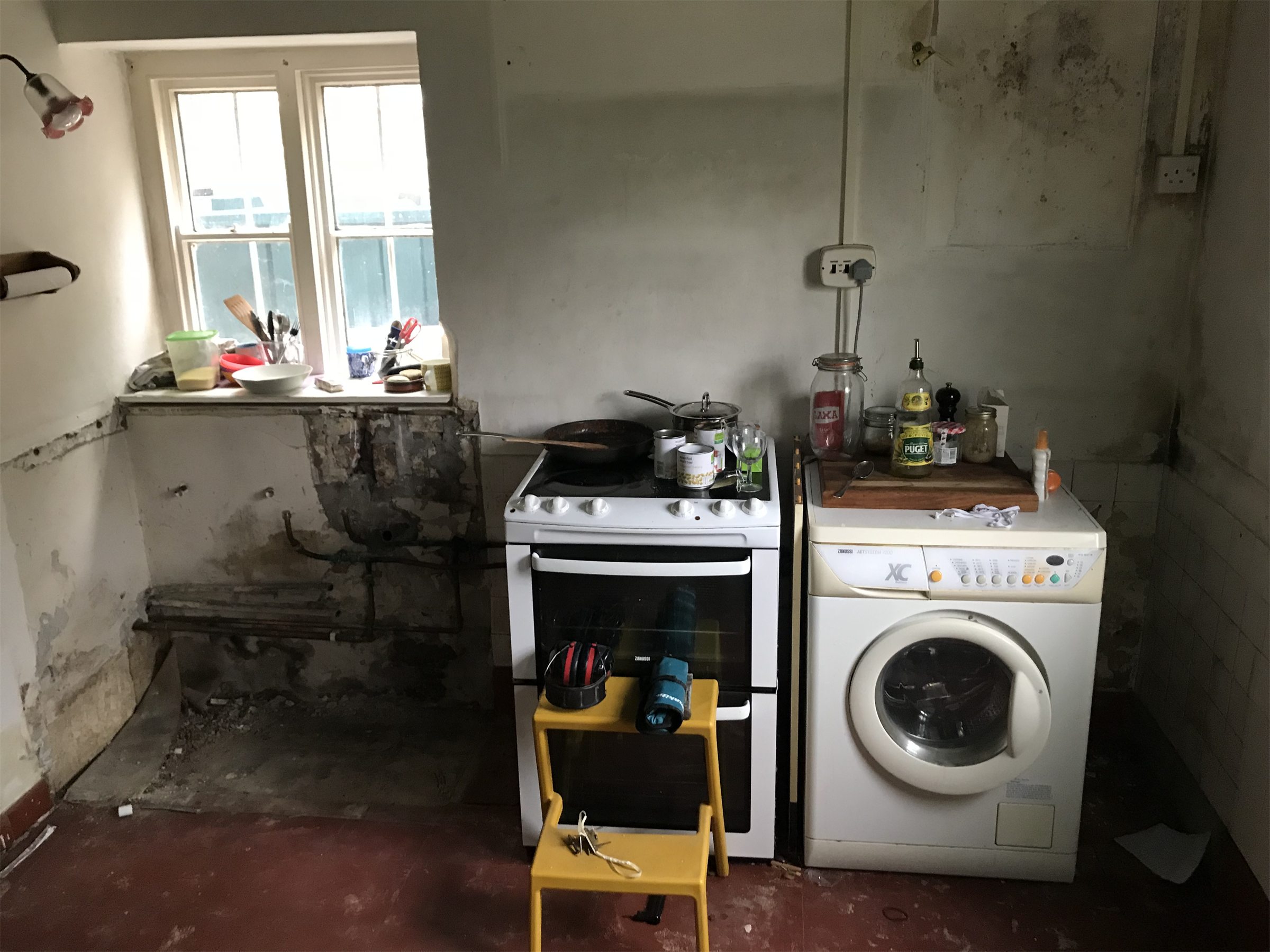
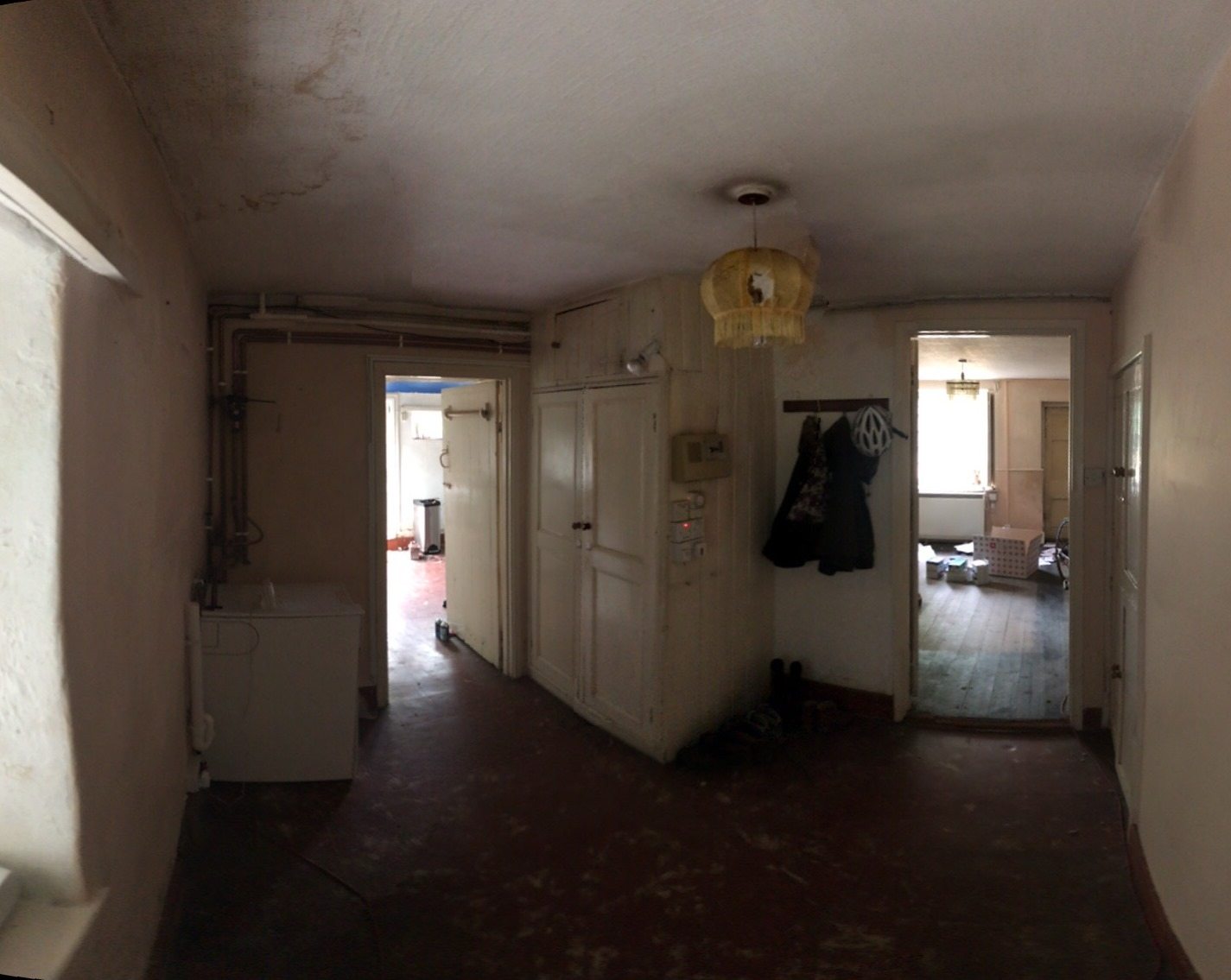
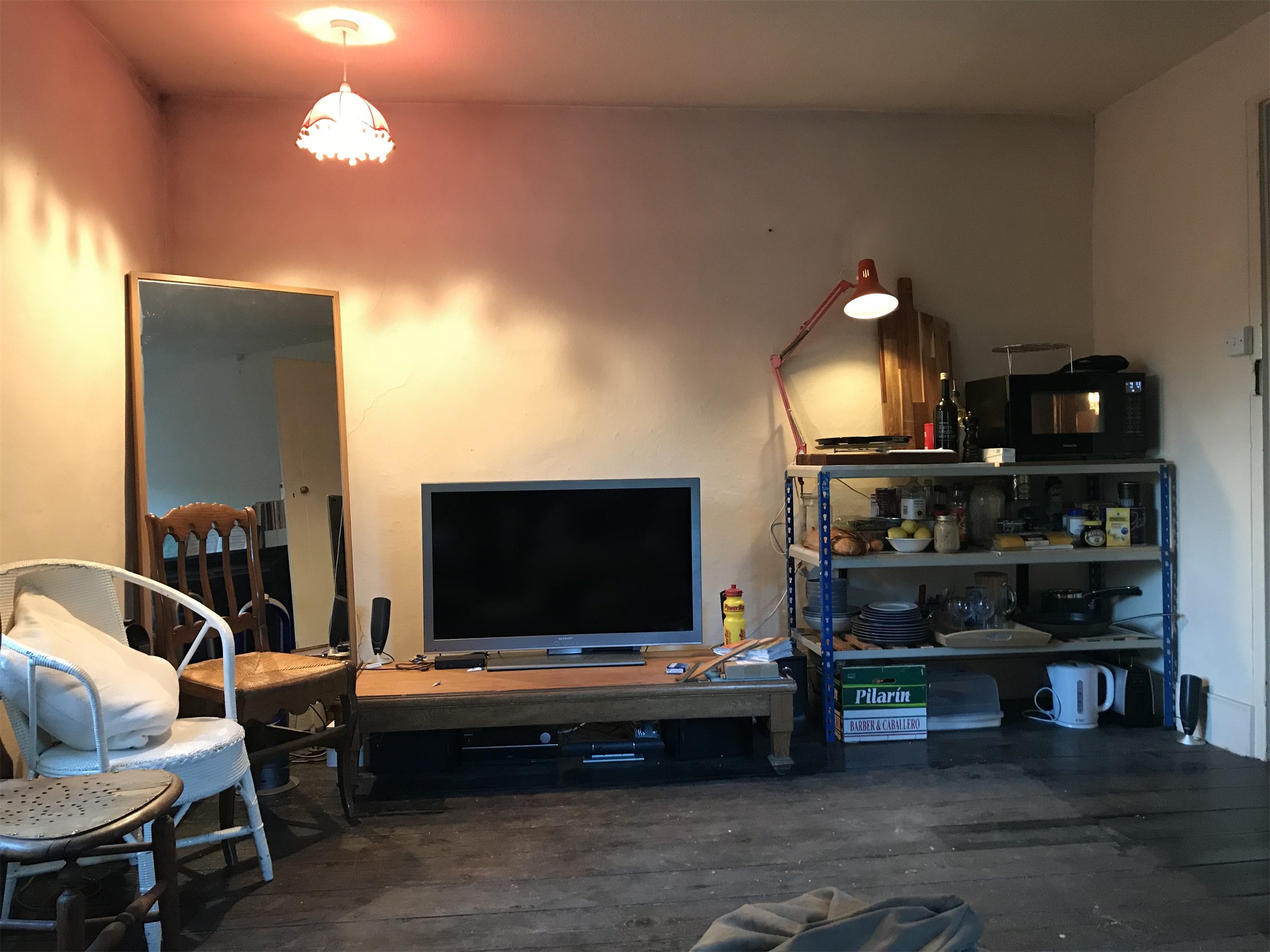
Then suddenly the kitchen was gone. Just like that the room was bared. No more cupboards, no work surfaces, no sink. Where once it was teaming with packets of this and that, stacked with crockery and washing up and still one of the more popular and used rooms in the house, it was now empty save for the fridge, cooker and washing machine. Three islands floating in space.
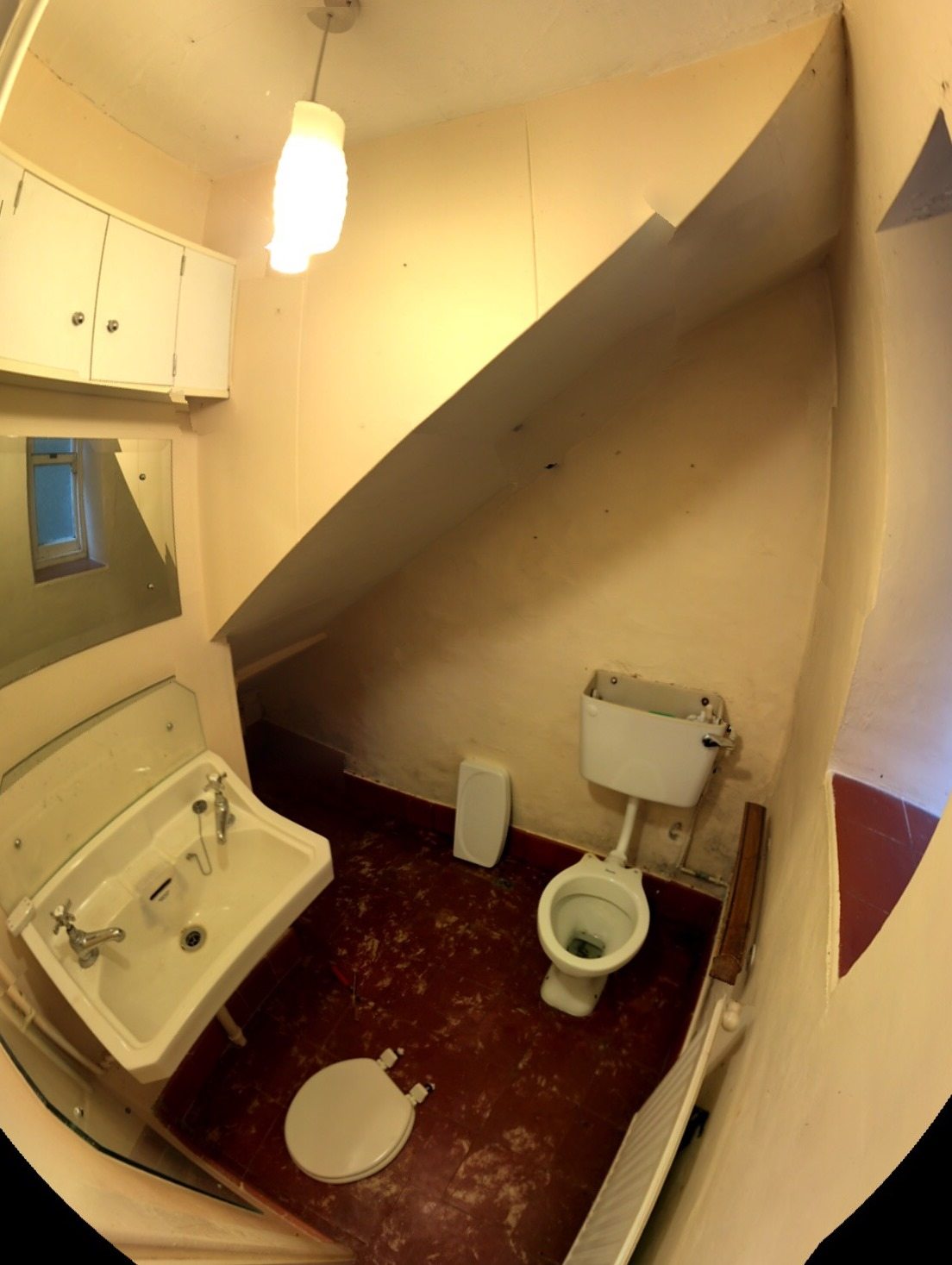
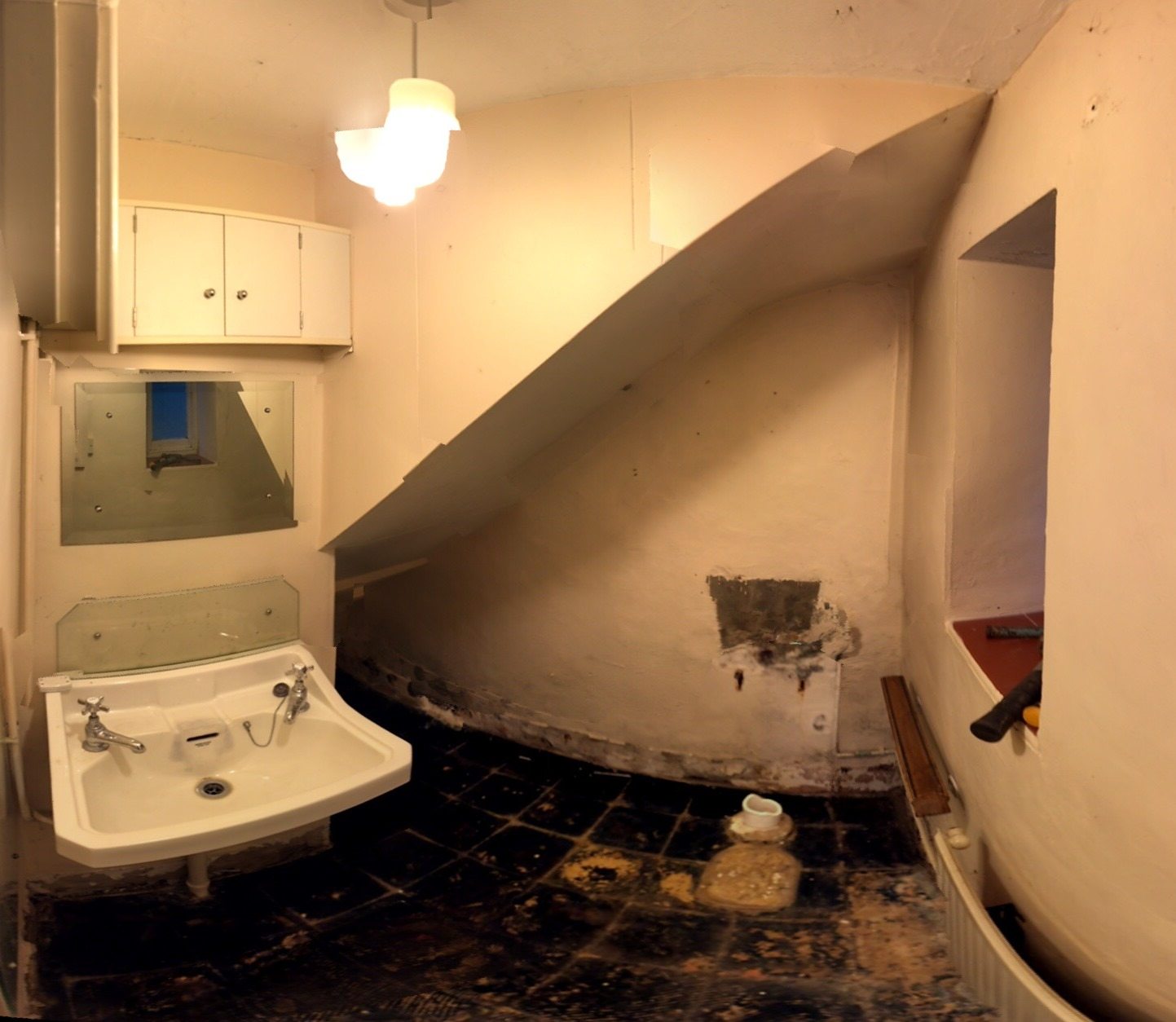
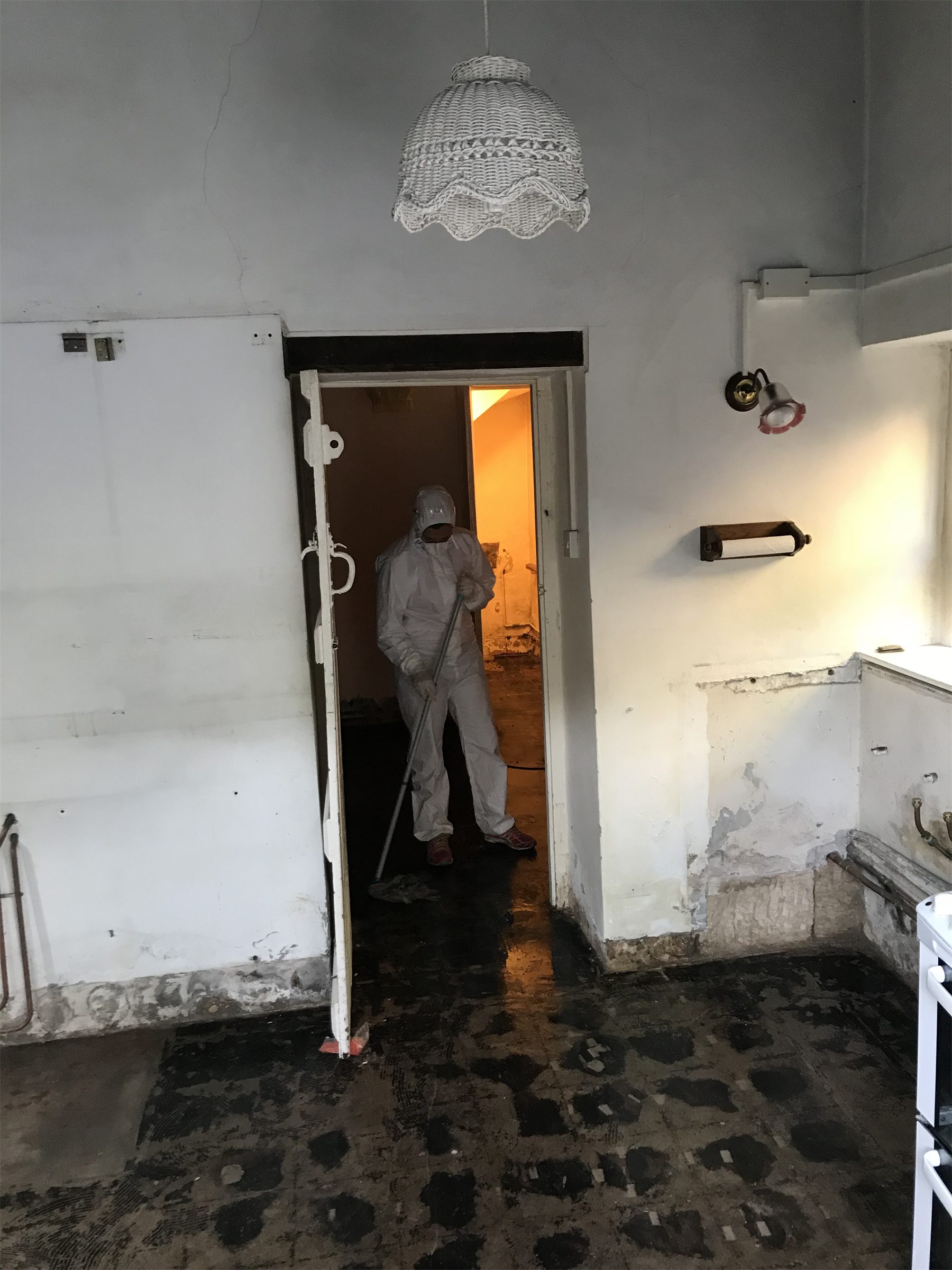
Fast forward a couple of weeks and back to the asbestos tiles. For our second anniversary weekend we treated ourselves to some full on PPE (personal protection equipment). The suits came with tags on like "radiation proof", the face masks were handily recommended on the council website and the only other stipulation was for plastic gloves. Come Saturday morning Beth popped out for a casual 20 mile run (probably in the hope it would all be done by her return) whilst the house was eviscerated of its boiler and downstairs toilet. This felt like something of a momentous occasion, not least because of the commitment to no central heating (thank goodness for such a long hot summer) but also because we've reached a stage in life where we have two whole toilets. Beth's half way visit to the house to top up water coincided with dragging of 110kg of boiler out of the side door. No mean feat, just tipping the hulk of be-tubed metal was hard enough. The little dolley cart came into its own; a more useful piece of kit there surely isn't. Getting it up the step out of the side door brought back memories of earlier scrummaging days, though happily back then if something that heavy had to be moved it tended to be fairly plump and squishy. With that out of the way the toilet suffered a little accident when the screws holding to the floor refused to unscrew, resulting in the implementation of a hammer on brittle ceramics. No love lost on this one.
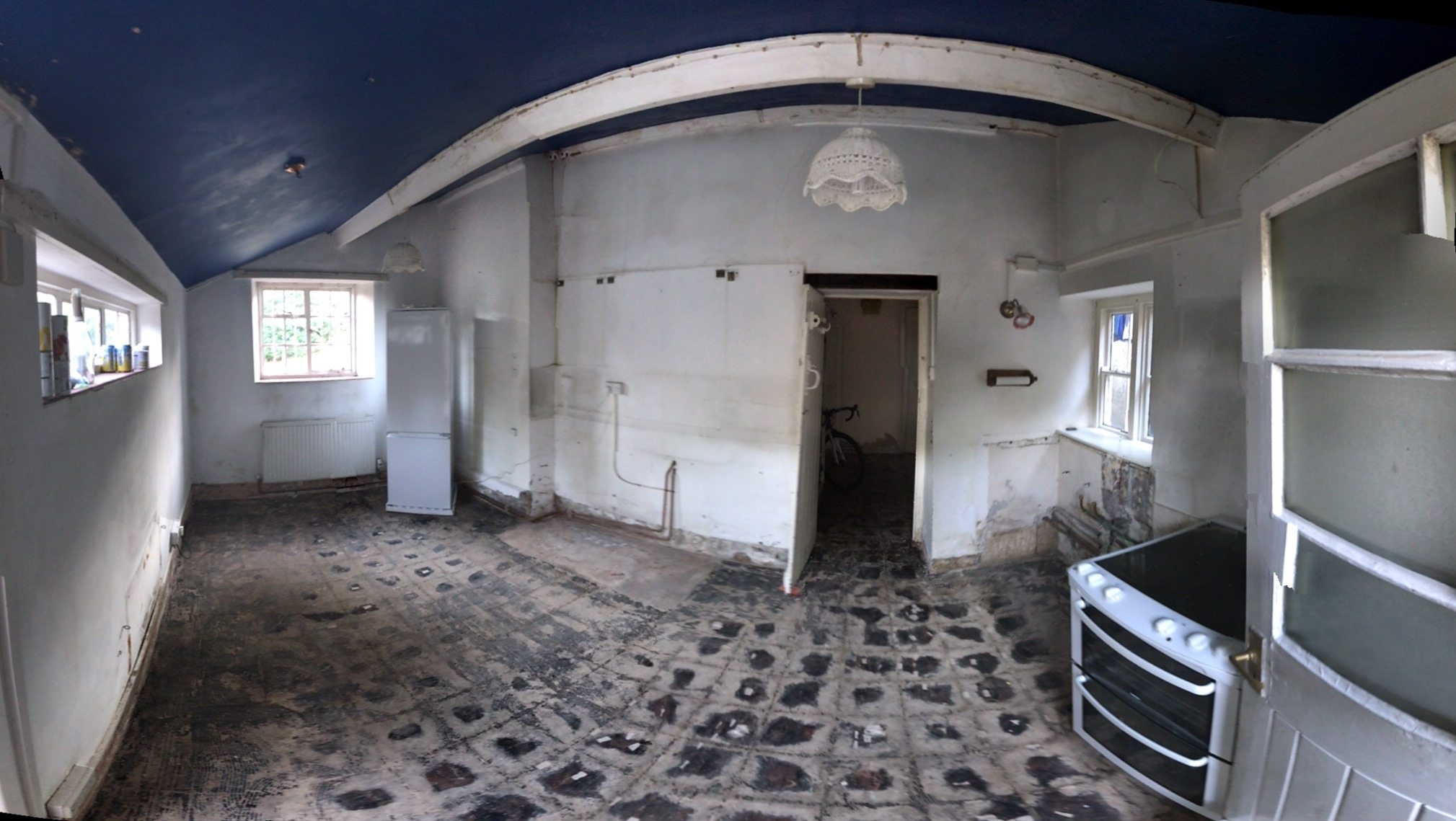
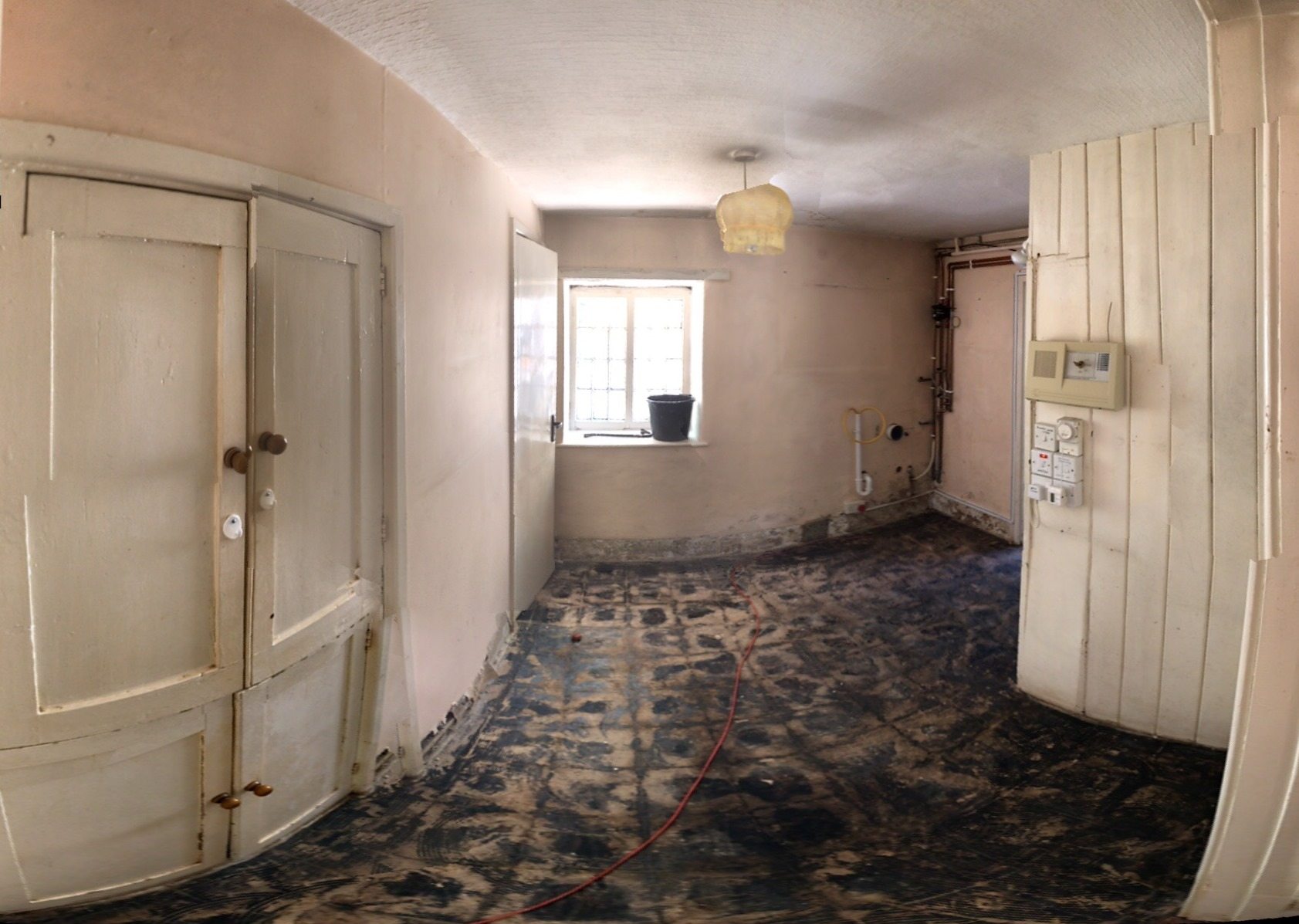
Finally there was nothing immovable atop the tiles so their removal could begin. With all doors to other rooms taped up for good measure and a 'dust suppressor' (plant sprayer to wet the tiles and stop dust) primed we set to on the already cracked tiles with the SDS and chisel bit. Joyfully the old adhesive was very lacklustre by now and the tiles mainly just peeled off without needing any chisel action and more importantly they peeled off whole. Every now and then one would split in two but on the whole it started well. The tiles were stashed into rubble bags before being taped shut and plonked outside, where they would be subsequently checked for tears then double bagged and taped shut. Eventually the fridge was shifted onto a bare patch to allow access to the trove of tiles it was standing on, likewise the range and washing machine which we had retained. The worst bit turned out to be the edges where the floor tiles had been covered by the edging tiles. These had to first be chipped off the walls to allow for proper removal of the floor tiles. With the SDS it was easy work but involved ferrying them out of the house at intervals which disrupts the flow of work. Laughably, the tiles were so well bonded to the plasterboard stud wall of the downstairs loo that we ended up just taking the lower portion of wall off instead. Never mind!
Happily we then had a night's stay at Lucknam Park to look forward to, not least because out nearest asbestos friendly tip doesn't accept any at weekends. The following Monday then, having pre-arranged the visit, we donned our PPE once more for a half hour drive to Purton, boot full of suspicious black bags. It felt a little Breaking Bad. We rocked up and were directed to a half-length shipping container with a hefty padlock securing its doors. Stencilled on the side were plenty of warning symbols and in big letters: ASBESTOS. A nice lady ambled over with the key and opened the door before standing a dozen yards away and watching us set to. We added our sacks to the burgeoning community already housed in there, joking about the 'little hole of death' we were creating. Upon asking what happens to all of it, we were told that with the naturally heavy clay soil around these parts, it just gets buried. A problem for another generation no doubt. As a final step and as stipulated by the environment agency you then have to remove your PPE before double bagging that too. And that was that, no more asbestos floors (we hope). We'll let you know how it went in fifty years.
* If you don't get this wittiest of witty triple layered puns, think hors piste mixed with œuvre d'art, the second dish in a meal and the culinarity of it all, and know it took me two days to think of it.